Change Country

-or-


This is part 2 of a 3-part leadership series on Operational Excellence.
By John Ryan
In the first article, I described Operational Excellence as a strategy delivery mechanism rather than a toolkit. That way of thinking is essential, but it only works if leaders also understand the cultural impact of Operational Excellence and the role they play in shaping it.
In my experience, most organisations do not struggle with a lack of effort or commitment. They struggle with how work gets done under pressure. And that is a cultural issue as much as it is a technical one.
In many organisations, urgency drives behaviour. When something goes wrong, people feel pressure to act quickly. The instinct is to fix the problem, take an action and move on.
Over time, this creates a firefighting culture. People are constantly reacting, jumping from issue to issue and often addressing symptoms rather than causes. The same problems keep coming back and frustration builds because effort does not translate into lasting improvement.
It is important to recognise that this behaviour is rarely due to a lack of competence. More often, it is a response to pressure, time constraints and expectations. Leaders can unintentionally reinforce it by rewarding speed and action over understanding and evidence.
This is where Operational Excellence plays a much bigger role than many people expect. The real value of methodologies like DMAIC is not just the tools. It is the mindset they encourage.
DMAIC introduces a disciplined, scientific approach to problem solving. It slows the reaction cycle just enough to ask better questions: what is the problem, where is it happening, what evidence do we have and what is actually causing it.
This approach moves people away from reacting and into thinking. It helps teams step out of firefighting mode and into a structured way of understanding problems before jumping to solutions. That shift does not happen automatically. It needs to be supported and reinforced by leadership.
Culture is often described as “the way we do things around here”. In practice, it is heavily influenced by what leaders ask about, what they pay attention to and what they reward.
If leaders consistently ask for quick fixes, teams will deliver quick fixes. If leaders ask questions about evidence, scope and root causes, teams will respond differently.
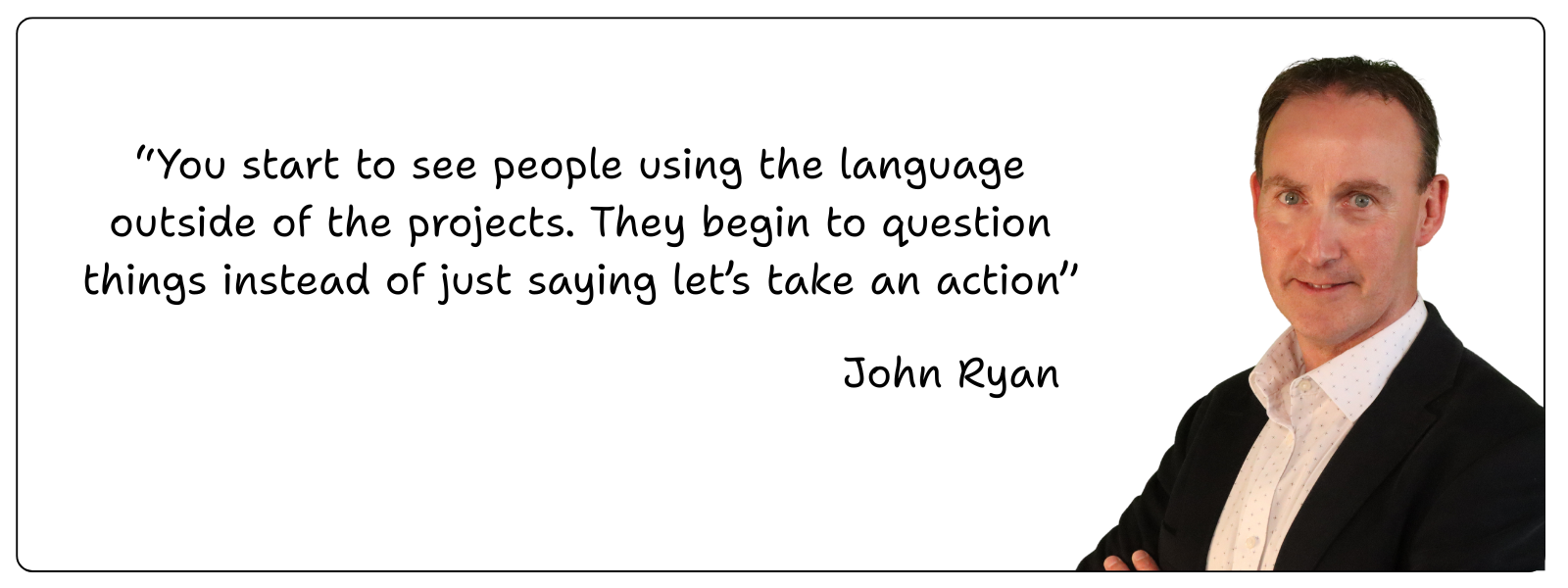
One of the most powerful cultural shifts that comes with Operational Excellence is the change in language people start to use. Instead of saying “let’s take some actions to try to address the problem”, people begin to ask “do we understand the problem”, “what data do we have” or “what is the systemic cause of this problem”.
When leaders model and reinforce that language, it signals that structured thinking is valued. Over time, this changes how people approach problems, not just within formal projects but in everyday work.
 Quote on Culture
Engagement is often talked about as something separate from performance. In reality, they are closely linked. People become disengaged when they are constantly dealing with the same issues and see little progress despite sustained effort.
Operational Excellence helps address this by giving people a structured way to solve problems and see tangible results. When teams can identify root causes, implement changes and prevent problems from recurring, confidence grows.
OpEx can have a positive impact on culture and engagement when it is implemented well. It is not about posters or slogans. It is about giving people the capability and confidence to think and work differently.
Another cultural lever that leaders often underestimate is visibility. When senior leaders engage with Operational Excellence work, attend report‑outs or ask thoughtful questions about projects, it sends a strong signal about what matters.
Recognition does not have to mean rewards. Often, it is about visibility and acknowledgement. Giving people the opportunity to present their work to senior leaders reinforces the value placed on structured problem solving and delivery.
This visibility also helps reinforce standards. When teams know they will be asked to explain their thinking, their data and their decisions, the quality of work improves. That is a cultural shift driven directly by leadership behaviour.
One of the biggest misconceptions about Operational Excellence is that culture change happens through training programmes alone. Training is important, but on its own it is not enough.
Culture changes when people apply what they have learned to real work and when leaders consistently reinforce the behaviours they want to see. That is why project‑based learning, mentoring and leadership engagement are so important.
When Operational Excellence is treated as a strategy delivery mechanism, culture change becomes a by‑product of how work gets done rather than a separate initiative.
Moving an organisation away from firefighting is not about slowing everything down. It is about being deliberate about where speed matters and where thinking matters more.
Operational Excellence gives leaders a framework to support that shift. It helps create an environment where people feel supported to step back, analyse problems properly and implement changes that last. When leaders consistently reinforce this approach, structured problem solving becomes the norm rather than the exception.

Cultural Shift Infographic
How SQT supports leaders to embed the right OpEx culture
Culture does not change because people attend a course. It changes because leaders design the right environment, reinforce the right behaviours and support people as they apply new ways of thinking to real work. That is where SQT focuses its support.
We work with leaders on the understanding that Operational Excellence culture is built through how programmes are set up and led, not just through tools or terminology. That is why our work often begins at champion and leadership level.
Through our champion and leadership training, we help organisations clarify what they want Operational Excellence to deliver, design a programme that aligns with strategy and put the right governance in place. This includes supporting leaders to select the right projects, identify the right people to lead them and set clear expectations around sponsorship, visibility and behaviour.
We then support the cultural shift through project‑based delivery. By combining structured training with mentoring and one‑to‑one support, we help people apply disciplined problem solving in real situations while leaders reinforce the behaviours that move the organisation away from firefighting and towards structured thinking.
In this way, culture change is not treated as a separate initiative. It becomes a natural outcome of how work is done, how decisions are made and how leaders engage with Operational Excellence across the organisation.
In the final article in this leadership series, I will focus on how leaders can tell whether Operational Excellence is actually working, what typically goes wrong and what to avoid if the programme is to be sustainable.
Part 1 – Operational Excellence Is a Strategy Delivery Mechanism – Not a Toolkit
Part 3 – How Leaders Know Operational Excellence Is Working — And When It Is Not
Lean Six Sigma Yellow Belt – QQI Level 6
Lean Six Sigma Green Belt – QQI Level 7
Lean Six Sigma Black Belt – QQI Level 8
 Categories
 Archive
 2026
2026